Within UFO Prophecy
Why Police Took UFO Prophecy Seriously
Chen Tao shows how authorities may respond cautiously to UFO prophecy after a recent catastrophic religious event.
On this page
- The shadow of Heaven's Gate
- Risk assessment without panic
- Balancing safety and religious freedom
Page outline Jump by section
Introduction
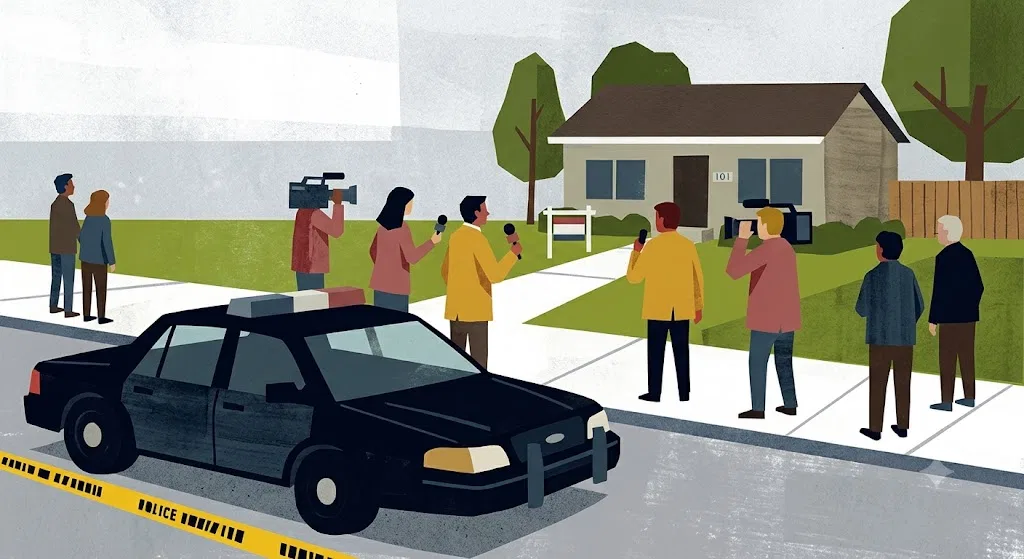
Police took the Chen Tao UFO prophecy seriously because it arrived less than a year after Heaven’s Gate, when a UFO-linked belief system had ended in 39 deaths in California. In Garland, Texas, the authorities were not trying to prove or disprove Hon-Ming Chen’s claim that God would appear on television and then arrive on Earth in March 1998. Their question was narrower and more urgent: if the prediction failed, would the group, its children, its neighbours, the media crowd or curious onlookers be at risk?
The answer was cautious but not panicked intervention. Garland police treated Chen Tao as a public-safety challenge rather than as a crime in progress. They gathered information, spoke directly with group members, consulted religious-studies expertise, prepared emergency plans, managed crowds and media access, and tried to avoid turning strange religious beliefs into a policing threat by mishandling them. That approach made Chen Tao a revealing case in the history of failed UFO predictions: the prophecy failed, but the feared catastrophe did not follow.
The shadow of Heaven’s Gate
Chen Tao entered public view at a moment when American police, journalists and residents had a fresh mental template for UFO prophecy gone wrong. On 26 March 1997, the San Diego County Sheriff’s Office found 39 members of Heaven’s Gate dead in Rancho Santa Fe; investigators determined that the deaths were a mass suicide carried out over several days. The group’s beliefs were tied to Comet Hale-Bopp and the expectation of departure from Earth, which made later UFO-linked prophecies harder for officials to dismiss as merely eccentric.[San Diego County Sheriff]sdsheriff.govSan Diego County Sheriff Heaven's Gate Case In all, 39 members of the "Heaven's Gate" cult were found dead. An investigation by the San DSan Diego County SheriffHeaven's Gate CaseIn all, 39 members of the "Heaven's Gate" cult were found dead. An investigation by the San Die…
That timing shaped the Garland response. In the FBI Law Enforcement Bulletin’s later case study, Garland police said Chen Tao’s leader had announced that a flying saucer would land in Garland on 31 March 1998 with God aboard, and that this came “on the heels” of the Solar Temple deaths and Heaven’s Gate. The phrase matters: the police concern was not simply that Chen Tao believed unusual things, but that recent precedent had shown how apocalyptic or UFO-related religious conviction could become a sudden public-safety emergency.[FBI: Law Enforcement Bulletin]leb.fbi.govLaw Enforcement BulletinLaw Enforcement Bulletin…
Chen Tao’s own prediction had several features that made the risk assessment more concrete than vague fear of “cults”. The group had moved to Garland, bought homes in a suburban neighbourhood, attracted international attention, and announced a precise prophetic schedule: God would appear on television on 25 March 1998 and physically appear on 31 March. Britannica summarises the failed sequence in similar terms: Chen predicted a television announcement before a physical manifestation on Earth, then revised his claims after nothing appeared.[Encyclopedia Britannica]britannica.comEncyclopedia BritannicaChen Tao | History, Beliefs, & Facts22 May 2026 — Chen predicted that God would announce his plans and materialize…
The fear was sharpened by the form of the claim. Failed UFO predictions can often be reinterpreted quietly, but Chen Tao’s forecast had a public countdown, a fixed place and a media audience. If the prophecy failed in front of cameras, police had to consider several possible reactions: despair inside the group, hostility from outsiders, crowd disorder, copycat fears, or a medical emergency involving adults and children.

Risk assessment without panic
Garland’s key decision was to separate unfamiliar belief from actionable danger. The FBI Bulletin article begins by warning that “cult” stereotypes can themselves become dangerous when held by officers responsible for public safety. It recommends the less loaded term “new religious movement” and stresses that most such groups remain within the law. This framing did not make police naïve; it gave them a way to ask practical questions rather than treat odd theology as proof of criminal intent.[FBI: Law Enforcement Bulletin]leb.fbi.govLaw Enforcement BulletinLaw Enforcement Bulletin…
The department therefore built a broad information picture. According to the FBI case study, Garland police contacted the FBI’s National Center for the Analysis of Violent Crime, the US Department of State, immigration authorities, Taiwanese offices, websites about new religious movements and academic experts. They also partnered with a local university professor, setting ground rules so the expert would advise rather than negotiate, and clarifying what information could later be used in research or media statements.[FBI: Law Enforcement Bulletin]leb.fbi.govLaw Enforcement BulletinLaw Enforcement Bulletin…
That choice shows the governance problem clearly. Police needed enough understanding to detect real warning signs, but they also needed to avoid delegating state authority to an outsider or letting academic observation become operational control. The advisory role was a compromise: law enforcement kept responsibility, while religious-studies expertise reduced the risk of misreading unfamiliar practices.
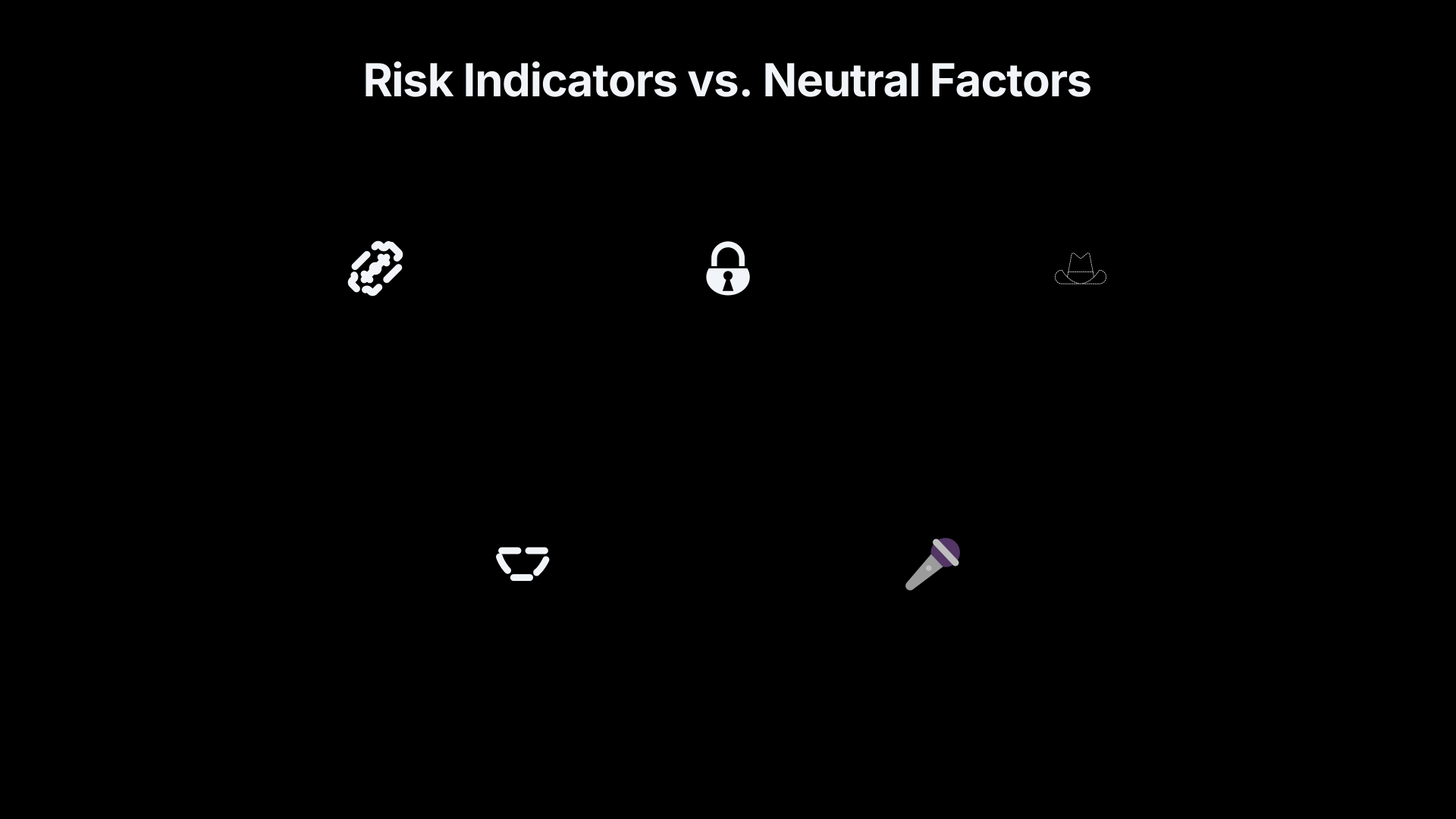
Several parts of the group’s behaviour looked strange to neighbours but were not automatically danger signals. The FBI article’s “neutral factors” included absolute devotion to a leader, social separation and unfamiliar customs around dress, diet, language or family life. In other words, white clothing, cowboy hats, unusual rituals and apocalyptic speech could not by themselves justify coercive intervention. The more relevant questions were whether there were weapons, threats, isolation from outside contact, plans for self-harm, abuse, coercion, or steps suggesting an imminent violent act.[FBI: Law Enforcement Bulletin]leb.fbi.govLaw Enforcement BulletinLaw Enforcement Bulletin…
Local evidence gave police reasons for concern but also reasons not to overreact. Charles Houston Prather’s contemporary study of God’s Salvation Church notes that Garland officials investigated a neighbourhood complaint that Chen was building a “landing site”; the actual issue was a gazebo on a flood plain, and the group complied when told it could not build there. This was exactly the kind of episode that could have fed panic if handled badly: a rumour with a UFO flavour became a routine code matter once inspected.[DNB]d-nb.infoOpen source on d-nb.info.
The safety plan was visible but restrained
By the critical dates in March 1998, Garland police had moved from assessment to contingency planning. Prather reports that the city mobilised between 50 and 70 police officers and emergency personnel, issued bright orange press credentials, cordoned off a 165-house section of the neighbourhood, limited street access to residents and credentialled media, stationed personnel near Duck Creek, drew on Dallas police for extra help, and created a “media corral” near Chen’s house.[DNB]d-nb.infoOpen source on d-nb.info.
The FBI case study describes an even wider emergency plan. Garland police set up an on-site command post, had a special weapons and tactics team available, placed child protective services on hand because the group included children, prepared fire and medical units in case of poisonous gas, arranged evacuation routes, kept a judge available for possible search warrants, and considered asking the Federal Aviation Administration to restrict helicopter traffic if necessary.[FBI: Law Enforcement Bulletin]leb.fbi.govLaw Enforcement BulletinLaw Enforcement Bulletin…
The striking point is that these measures were mostly preparatory and environmental. Police did not raid the group, arrest Chen, or try to prevent the prophecy from failing. They managed the setting around the prophecy: access, traffic, press pressure, emergency response, and the possibility of rapid legal authorisation if a real danger emerged. That is why the case is better understood as a decision cluster than a single intervention.
This restraint was not passivity. It was a form of risk control suited to a legally protected religious group. The OJP abstract of the FBI article summarises the model as accurate information, meaningful dialogue, mobilisation of community resources and planning for the worst. The aim was to safeguard both Garland residents and Chen Tao members while avoiding serious confrontation between the group, the community and the authorities.[Office of Justice Programs]ojp.govOpen source on ojp.gov.
Dialogue became a policing tool
Garland police did not rely only on surveillance or emergency readiness. They deliberately built rapport with Chen Tao. The FBI case study says an officer was assigned soon after the group arrived to maintain contact with members, using an open and friendly approach. He told members the department recognised their constitutional rights and saw its role as protecting those rights. He and others met often with Chen Tao officials, discussed media coverage, gave the group a 24-hour contact number, and eventually met with members for dinner every two weeks.[FBI: Law Enforcement Bulletin]leb.fbi.govLaw Enforcement BulletinLaw Enforcement Bulletin…
This relationship served three safety functions. First, it helped Chen Tao members see police as potential protectors against hostile outsiders rather than as persecutors. Second, it gave officers a baseline sense of normal group behaviour, making sudden changes easier to notice. Third, it made it possible to ask direct questions about violence or suicidal intent and judge the answers with more confidence.[FBI: Law Enforcement Bulletin]leb.fbi.govLaw Enforcement BulletinLaw Enforcement Bulletin…
The emphasis on trust also addressed a classic policing failure mode in encounters with marginal religious groups: treating the leader as a fraud from the outset. The FBI article warned that it is dangerous for officers to approach leaders as if they were merely disingenuous con artists. That does not mean taking every prophecy at face value. It means recognising that humiliation, deception by authorities or broken promises can intensify fear and make communication harder precisely when communication is most needed.[FBI: Law Enforcement Bulletin]leb.fbi.govLaw Enforcement BulletinLaw Enforcement Bulletin…
Garland also kept communication open with residents. The group’s presence unsettled many neighbours, who did not understand its dress or behaviour and feared violence. Police therefore updated the community on investigation developments and contingency plans. This mattered because crowd fear can create its own risks: harassment, trespass, rumours and escalating confrontation.[FBI: Law Enforcement Bulletin]leb.fbi.govLaw Enforcement BulletinLaw Enforcement Bulletin…
Media pressure was part of the hazard
Chen Tao’s prophecy was not simply observed by the media; it was partly performed through media. Researchers who studied the group argued that Chen used press attention as a way to broadcast God’s message, while journalists used Chen Tao as a compelling story about false prophecy, UFO belief and possible disaster. Ryan J. Cook’s study of Chen Tao in Garland notes that the group’s leader announced God’s television appearance and physical arrival, and that the group’s relationship with mass media became central to its adaptation in suburban America.[ResearchGate]researchgate.netResearch Gate Reporters in God-land, Texas: The Role of the Mass MediaReporters in God-land, Texas: The Role of the Mass Media…January 1, 1999 — Chen Tao is a Buddhist-Christian new religious…
This created a practical burden for police. The FBI case study says reporters and camera crews came from as far away as England, France, Germany and China. Garland police used public-information officers, issued media passes, prepared press kits, gave interviews, and arranged parking and sanitation facilities. Those details may sound mundane, but they prevented a religious prophecy from becoming a disorderly crowd incident in a residential neighbourhood.[FBI: Law Enforcement Bulletin]leb.fbi.govLaw Enforcement BulletinLaw Enforcement Bulletin…
Prather’s account of 25 March, the night of the predicted television appearance, shows why crowd management mattered. By late evening, media crews were setting up on the street; at midnight, the expected broadcast produced only static. Police, reporters and onlookers waited in suspense, and some speculated that Chen and part of the group might be about to die inside the house. Chen emerged roughly 25 minutes later to cameras and reporters, with more than 350 people crowded around the suburban corner.[DNB]d-nb.infoOpen source on d-nb.info.
That scene explains the difference between “nothing happened” and “nothing needed managing”. The prophecy failed, but the failure occurred in public, under emotional pressure, with residents, children, police, journalists and curious spectators nearby. The police concern after Heaven’s Gate was not irrational fear of religion; it was anticipation of how a public failure could become dangerous if unmanaged.

Balancing safety and religious freedom
The Garland case is often remembered because the feared tragedy did not occur. After the 31 March prediction failed, the FBI account says Chen announced that he had misunderstood God’s plans, and members quietly returned to their homes; those who did not return to Taiwan later moved to upstate New York.[FBI: Law Enforcement Bulletin]leb.fbi.govLaw Enforcement BulletinLaw Enforcement Bulletin…
That peaceful ending should not obscure the harder lesson. Police had to prepare for suicide, violence, poisonous gas, child-protection needs, crowd control, media disruption and possible search warrants while also respecting a group whose beliefs were protected and whose members had not, on the evidence available, committed a crime. The operational line was narrow: intervene too little and risk another Heaven’s Gate; intervene too aggressively and risk violating rights or provoking the danger the state feared.
The case also complicates a simple “failed prophecy” story. Chen Tao’s public prediction failed plainly: God did not appear on television as announced, and the expected earthly arrival did not occur. But the governance success was not that police debunked the prophecy. It was that they kept the failure from becoming a second catastrophe. In the broader history of failed UFO predictions, Garland shows that institutions sometimes respond not by arguing about aliens, but by managing the human risks that gather around a date, a crowd, a disappointed expectation and a recent memory of mass death.
Why the police response still matters
The Chen Tao episode remains useful because it shows a middle path between ridicule and repression. Authorities did not need to accept the group’s claims about God, flying saucers or apocalypse. They did need to understand enough to distinguish theatrical prophecy, media spectacle, neighbour anxiety and genuine danger.
The most important policing lessons were practical:
- Treat recent precedent as a warning, not a verdict. Heaven’s Gate made caution reasonable, but it did not prove Chen Tao would behave the same way.
- Separate strange belief from risk indicators. Unfamiliar dress, prophecy and communal loyalty were not enough; police looked for signs of violence, suicide, coercion or immediate harm.
- Use dialogue before crisis. Rapport made it easier to ask hard questions when the predicted dates approached.
- Plan visibly but avoid unnecessary escalation. Command posts, medical readiness and media control created options without turning the prophecy into a siege.
- Protect the group as well as the public. Garland police framed their role as safeguarding residents, children, neighbours and Chen Tao members themselves.
That is why “police concerns after Heaven’s Gate” belongs inside the history of failed UFO predictions. The failed prediction was Chen Tao’s; the policy intervention was Garland’s. One tested a belief about UFO-linked divine arrival. The other tested whether a city could take the risks seriously without treating religious failure itself as a crime.
Amazon book picks
Further Reading
Books and field guides related to Why Police Took UFO Prophecy Seriously. Use these as the next step if you want deeper reading beyond the article.


Combating cult mind control
Relevant to understanding why authorities may monitor high-control groups.
Cults Inside Out
Discusses risks, warning signs and responses to controversial groups.
eBay marketplace picks
Marketplace Samples
Example marketplace items related to this page. Use the search link to explore similar finds on eBay.




Endnotes
1.
Source: britannica.com
Link:https://www.britannica.com/topic/Heavens-Gate-religious-group
Source snippet
Encyclopedia BritannicaHeaven's Gate | UFOs, Mass Suicide, New Religious...26 May 2026 — In March 1997 39 members of the Heaven's Gate g...
Published: May 2026
2.
Source: leb.fbi.gov
Title: Law Enforcement Bulletin
Link:https://leb.fbi.gov/file-repository/archives/sep00leb.pdf
Source snippet
Law Enforcement Bulletin...
3.
Source: britannica.com
Link:https://www.britannica.com/topic/Chen-Tao
Source snippet
Encyclopedia BritannicaChen Tao | History, Beliefs, & Facts22 May 2026 — Chen predicted that God would announce his plans and materialize...
Published: May 2026
4.
Source: ojp.gov
Link:https://www.ojp.gov/ncjrs/virtual-library/abstracts/interacting-cults-policing-model
5.
Source: d-nb.info
Link:https://d-nb.info/1115332651/34
6.
Source: researchgate.net
Title: Research Gate Reporters in God-land, Texas: The Role of the Mass Media
Link:https://www.researchgate.net/publication/216661364_Reporters_in_God-land_Texas_The_Role_of_the_Mass_Media_in_a_New_Religious_Movement%27s_Adaptation_to_Suburban_America
Source snippet
Reporters in God-land, Texas: The Role of the Mass Media...January 1, 1999 — Chen Tao is a Buddhist-Christian new religious...
Published: January 1, 1999
7.
Source: britannica.com
Title: Marshall H Applewhite
Link:https://www.britannica.com/biography/Marshall-H-Applewhite
8.
Source: history.com
Title: heavens gate cult members found dead
Link:https://www.history.com/this-day-in-history/march-26/heavens-gate-cult-members-found-dead
9.
Source: researchgate.net
Link:https://www.researchgate.net/publication/216661363_God%27s_Descending_in_Clouds_Flying_Saucers_Anthropological_Approaches_to_UFOs_in_the_Religious_Register
10.
Source: sdsheriff.gov
Link:https://www.sdsheriff.gov/bureaus/media-relations/common-questions/[heaven-s-gate
Source snippet
San Diego County SheriffHeaven's Gate CaseIn all, 39 members of the "Heaven's Gate" cult were found dead. An investigation by the San Die...
11.
Source: online.ucpress.edu
Link:https://online.ucpress.edu/nr/issue/3/1
12.
Source: abcnews.com
Link:https://abcnews.com/US/heavens-gate-survivor-reflects-cults-mass-suicide-25/story?id=83213680
Additional References
13.
Source: cesnur.org
Title: chen cook
Link:https://www.cesnur.org/testi/bryn/chen_cook.htm
Source snippet
Chen Tao in TexasChen Tao's leader announced that God the Heavenly Father would appear on television on the 25 th of March, 1998, a...
14.
Source: instagram.com
Link:https://www.instagram.com/p/DZGAmBlEV7g/
15.
Source: semanticscholar.org
Link:https://www.semanticscholar.org/paper/Meeting-God-in-Garland%3A-A-Model-of-Religious-Kliever/455a96be363aab8e07affca9e8d870e77752557e
16.
Source: facebook.com
Link:https://www.facebook.com/ABCNews/posts/the-39-victims-of-the-largest-mass-suicide-on-us-soil-in-history-were-members-of/10161668744138812/
17.
Source: economist.com
Link:https://www.economist.com/united-states/1998/04/02/waiting-for-god-oh
18.
Source: downloads.cs.stanford.edu
Link:https://downloads.cs.stanford.edu/nlp/data/jiwei/data/vocab_wiki.txt
19.
Source: academia.edu
Link:https://www.academia.edu/30227667/_God_s_Descending_in_Clouds_Flying_Saucers_on_Earth_to_Save_People_Mass_Mediation_of_Prophecy_in_a_Taiwanese_Syncretic_Movement
20.
Source: dallasobserver.com
Link:https://www.dallasobserver.com/uncategorized/in-honor-of-the-day-god-stood-up-garland-we-look-at-five-texas-linked-ufo-cults-7083063/
21.
Source: facebook.com
Title: in march of 1997 americans woke up to the largest mass suicide in the countrys h
Link:https://www.facebook.com/vanityfairmagazine/posts/in-march-of-1997-americans-woke-up-to-the-largest-mass-suicide-in-the-countrys-h/1366726181991998/
22.
Source: youtube.com
Title: Episode 749: The Heaven’s Gate Tragedy
Link:https://www.youtube.com/watch?v=OtNseh3LOTw
Source snippet
USA-Bodies of Heaven's Gate cult members released...
Topic Tree